
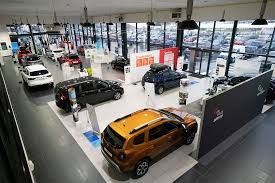
Automotive dealerships and garages face a major fire risk in France. High combustible load, hazardous technical activities and increased vulnerability at night can turn an incident into a loss exceeding EUR 10 million. This article summarizes the main issues and prevention priorities.
1. A specific and often underestimated risk
Automotive dealerships combine several uncommon risk factors. Vehicles, fuels, batteries, oils, solvents and technical operations such as welding or grinding create a highly flammable environment.
Recurring patterns observed:
- High severity: losses can range from EUR 50k to more than EUR 10m depending on the site configuration.
- Night-time occurrence: most severe losses start outside working hours, when no staff are present.
- Rapid fire spread: lightweight metal structures can collapse within 15 to 20 minutes after flashover.
Public data from the French ARIA/BARPI database and RiskCare Consulting field feedback confirm these recurring trends.
2. Four main causes to monitor
Documented dealership fires show stable causal mechanisms, with an emerging risk linked to the energy transition.
Electrical failure (35-40% of losses)
Overheated cables, faulty panels and electrical arcs are especially common in older or highly equipped buildings. This is the leading documented cause.
Hot work (20-25%)
Welding, grinding and cutting during maintenance work. The risk is aggravated when no formal hot-work permit process exists. It is highly controllable through organization.
Malicious acts (20-25%)
Deliberate fires, particularly on outdoor vehicle yards, often occur at night. This reinforces the importance of access control and perimeter security.
Lithium-ion batteries in electric vehicles (emerging risk)
Thermal runaway may occur during charging or after an impact, with possible re-ignition hours after extinguishment. A documented French case in 2020 required prolonged immersion protocols.
3. Consequences and real-world impact
A major fire does not only destroy a dealership. The effects can cascade across the whole business ecosystem.
Direct impacts:
- Partial or total destruction of the building and equipment.
- Loss of new and used vehicle stock.
- Loss of documents, customer records or centralized data.
Indirect impacts:
- Full interruption of commercial activity, with reconstruction often taking 12 to 18 months.
- Third-party impacts: toxic smoke, polluted runoff water, traffic disruption.
- For groups: multi-site exposure if IT systems or support functions are centralized.
Documented case, 2010, Treillieres, Loire-Atlantique: after a malicious fire, two firefighters were electrocuted after contact with an unmapped high-voltage line. This case illustrates the specific third-party risk for emergency responders.
4. Prevention strategy: six priorities
Effective prevention must target the identified causal mechanisms. The following measures significantly reduce risk severity.
01 - Control electrical risk
Q18 inspections, Q19 thermography, preventive maintenance of electrical panels and shutdown of non-essential energy supplies outside working hours.
02 - Manage hot work
Systematic hot-work permits, post-work fire watch for at least one hour and dedicated work areas.
03 - Secure outdoor vehicle yards
Fencing, access control, lighting and video surveillance. Outdoor yards are a common entry point for malicious acts.
04 - Adapt to EV and battery risk
Team training, dedicated intervention protocols, compartmented charging areas and coordination with local fire services.
05 - Compartmentation and structural protection
Segregation of technical rooms, fire-rated doors and smoke extraction. This is the key measure that can significantly reduce severity once a fire has started.
06 - Detection and remote monitoring
Automatic detection linked to certified remote monitoring is critical during periods when the site is unoccupied.
Conclusion: fire in automotive dealerships is a structural, high-severity risk. The growth of electric vehicles adds a new operational dimension. A robust strategy should prioritize electrical risk control, hot-work management, outdoor yard protection and compartmentation of technical areas.
Source: RiskCare Consulting, Sector Fire Risk Summary for Automotive Dealerships, April 2025